For a custom jewelry box project, the first questions are usually not about decoration. Buyers need to know whether the minimum order quantity fits the launch plan, how a sample is approved and how long production will take. Clear information at the start gives the factory a better basis for structure, material and price recommendations.
Start with the product and retail objective
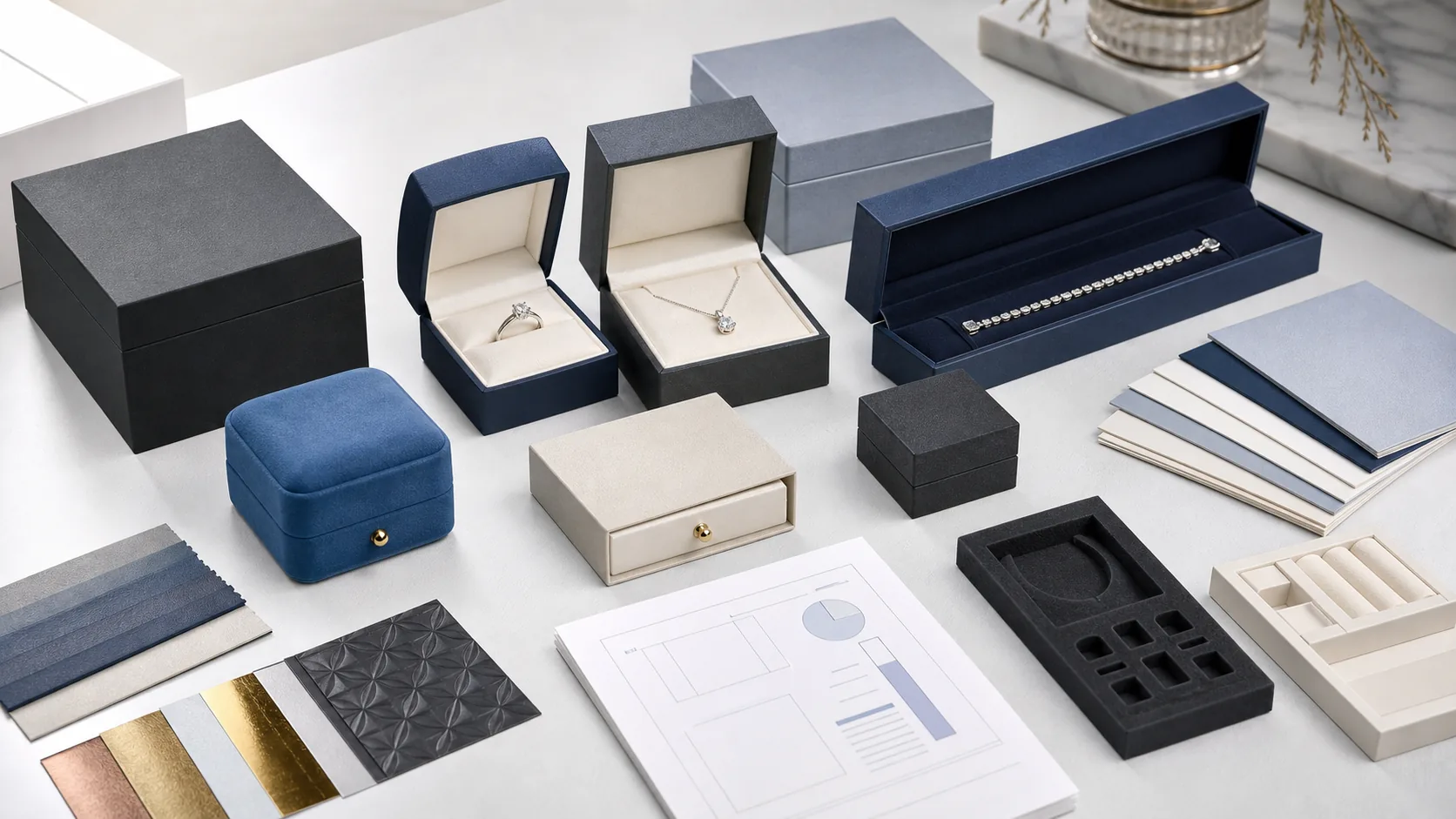
State what the box needs to hold: ring, pendant, bracelet, earrings, watch or a gift set. Include the product dimensions, approximate weight and the presentation you want when the box is opened. A precise product brief helps the manufacturer propose the right insert, board thickness and closure method.
For premium retail, also describe where the box will be used. Counter display, e-commerce shipping, a campaign gift set and daily point-of-sale packaging need different protection and opening experiences. Browse TOP PACK's custom jewellery box options before finalising the brief.
How MOQ affects a custom jewelry box quotation
MOQ is linked to the structure, material availability, printing or logo process and whether a bespoke insert is required. A simple existing structure may be suitable for a smaller trial order, while a new rigid box size, special surface paper or engineered insert may require a higher quantity to spread setup work efficiently.
Rather than asking only for a minimum quantity, request quotation options at a few realistic volumes. This lets you compare the unit-cost effect of the same specification at launch, replenishment and annual-order quantities without changing the brand experience.
What to include when requesting a sample
A useful sample request includes box dimensions, target material or reference photos, logo artwork, insert requirements, intended colour and any finish such as foil stamping, embossing, debossing or textured paper. Vector logo files and a clear colour reference reduce interpretation risk.
Approve the sample against practical checks: product fit, insert retention, lid alignment, logo position, surface appearance and packaging protection. If the item will ship internationally, confirm the outer-carton packing plan at the same time.
Plan lead time in stages
Lead time should be planned as a sequence: technical confirmation, artwork approval, sample production, sample approval, material preparation, mass production, quality inspection and dispatch. Complex structures, new tooling and special finishes normally add decision points, so an early, complete brief is more valuable than a rushed purchase order.
When a launch date is fixed, tell the manufacturer the required delivery date and destination at the start. TOP PACK can use that information to identify risks early and align the packaging specification with the available production window.
A practical enquiry checklist
- Product type, dimensions and weight
- Required box quantity and target order volumes
- Reference photos, sketch or desired opening style
- Material, colour, logo and surface-finish preferences
- Insert layout and protection requirements
- Sample deadline, production deadline and delivery destination
Send the checklist with your enquiry through the TOP PACK contact page. The more complete the starting information, the faster a manufacturer can return a useful proposal and sample plan.