
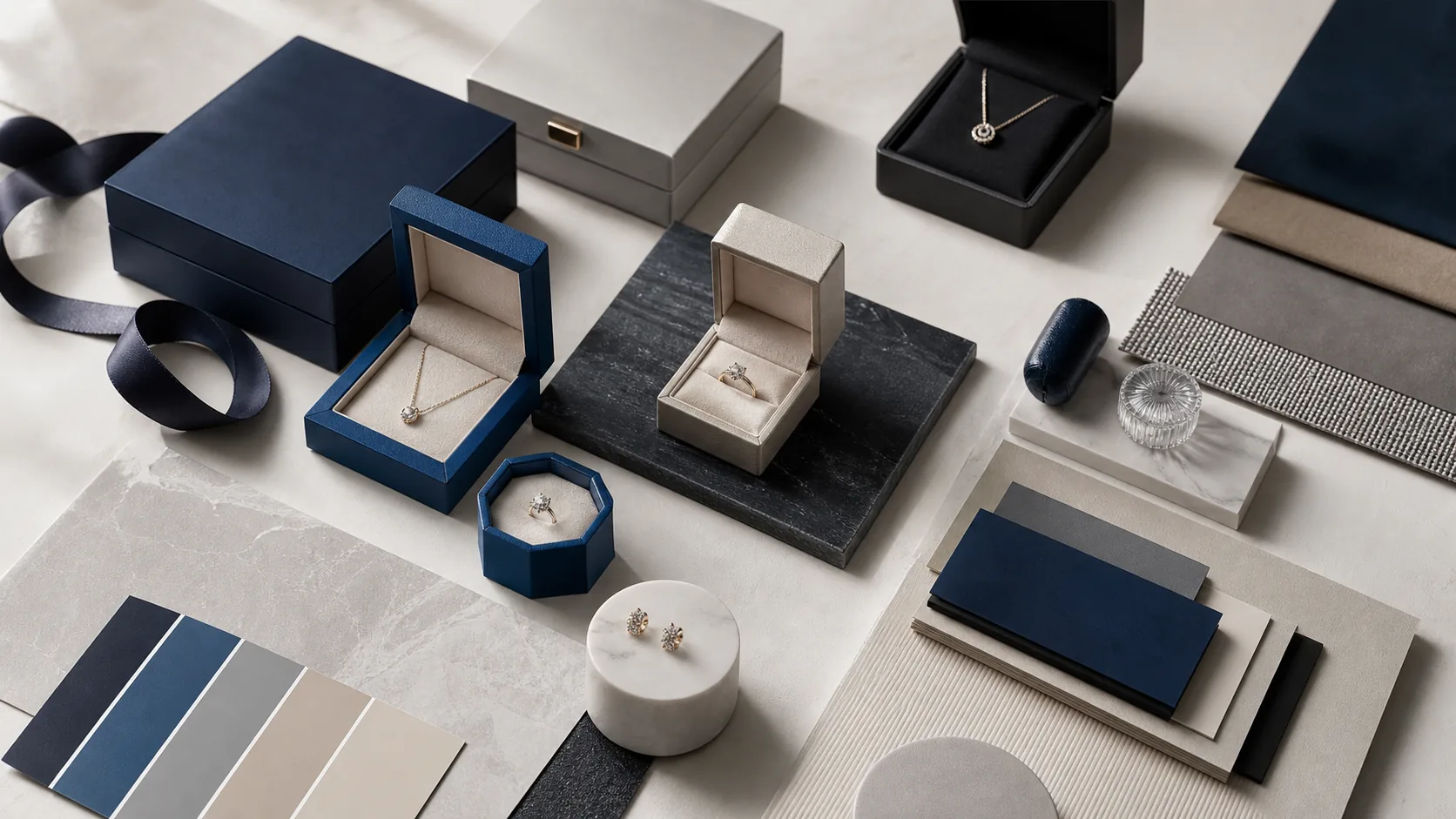
Jewelry packaging has to do more than look attractive in a product photo. It must present the piece clearly, hold it securely, fit the brand’s visual system, and work in the retail or e-commerce experience where customers will receive it. The right choices start with the product and use case—not with a trend palette.
Start with the jewelry and its presentation
List the products that will share the packaging: rings, earrings, bracelets, necklaces, pendants, charms, or a coordinated set. Their shapes and proportions affect the insert, clearance, and viewing angle. A ring slot is not automatically suitable for a pendant, and a multi-piece set may need a different layout from a single item. Use actual product dimensions or a physical sample when planning the insert.
Choose a structure for the buying experience
Decide how the package will be opened, displayed, stored, and shipped. A box presented across a retail counter has different priorities from a compact mailer sent directly to a customer. Consider lid movement, opening clearance, product visibility, and whether the chosen format can be packed consistently. These decisions should be reviewed together rather than treated as decoration added at the end.
Build a visual system that can repeat
Choose a small set of brand colors, surface textures, and logo treatments that can work across the product range. A restrained palette can help different box sizes feel related, while a contrasting interior or carefully placed accent can focus attention on the jewelry. Check how the design looks with the actual product in the box; the empty package alone does not show the complete presentation.
Specify the frame, covering, and interior separately
Ask for the shell frame, exterior covering or finish, and interior material to be identified as separate parts. MDF, solid wood, paperboard, and plastic describe different constructions; a decorative surface covering does not identify the frame beneath it. Likewise, an insert is the functional component that holds and presents the product, while velvet, suede, or another fabric describes a possible surface. Confirm the actual combination for the selected model instead of assuming that a category name defines every material.
Approve branding and fit on a sample
Review logo size, position, color, and finish on the proposed surface. Then place the actual jewelry in the sample and check that it sits securely without unwanted pressure, that the lid or closure operates as intended, and that the product is visible when opened. If the package will travel through e-commerce fulfillment, review the packed configuration as well.
A useful packaging brief includes the product or measurements, sales channel, target quantity, preferred visual references, and any handling requirements. Share those details with the supplier, compare the proposed construction with an approved sample, and confirm production specifications before ordering. This turns a visual direction into a packaging system a team can evaluate and repeat.